
U.S. Schools Expand AI Literacy Programs as Student Demand Accelerates
U.S. Schools – American schools and universities are rapidly expanding artificial intelligence education programs as demand for technology-focused careers continues to grow across the United States. From public high schools introducing AI literacy courses to major universities redesigning computer science curriculums, educators are responding to a changing job market that increasingly values digital and analytical skills. Recent education reports and workforce studies show that AI-related learning is becoming a priority not only for STEM students but also for those studying business, healthcare, communications, and the humanities.
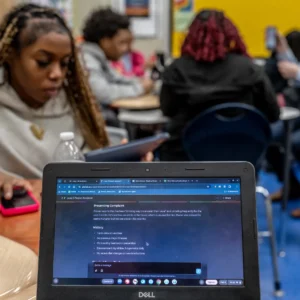
AI Education Moves Beyond Traditional Computer Science
For years, artificial intelligence was mostly discussed in advanced university research labs or specialized engineering courses. That landscape is changing quickly. School districts in states including California, Texas, Florida, and New York are now integrating AI concepts into classroom learning much earlier. Students are being introduced to machine learning basics, ethical technology use, data analysis, and responsible digital citizenship before they even reach college.
According to data released by education technology organizations in 2025, enrollment in AI-focused high school electives has increased significantly compared to previous academic years. Many districts say students are showing strong interest in practical skills connected to future careers, particularly in fields tied to automation, cybersecurity, software development, and digital media.
Education leaders also believe AI literacy is becoming as important as traditional computer literacy was two decades ago. Teachers are emphasizing that understanding how AI systems work can help students evaluate online information more critically and prepare for a workplace increasingly shaped by automation tools.
Universities Redesign Degree Programs for Workforce Demands
Several major U.S. universities have announced updated academic programs aimed at preparing students for a technology-driven economy. Institutions including Arizona State University, Carnegie Mellon University, the University of Texas system, and Purdue University have expanded AI-related coursework across multiple departments.
Instead of limiting artificial intelligence education to engineering schools, universities are integrating it into healthcare, journalism, law, finance, and business programs. Faculty members say employers are looking for graduates who can work alongside AI systems while still applying human judgment, communication skills, and ethical decision-making.
Recent labor market studies from the World Economic Forum and U.S. workforce analysts suggest AI-related job postings continue to rise nationwide. Roles connected to data science, AI operations, prompt engineering, cloud computing, and digital automation remain among the fastest-growing career categories in the country.
University advisors also report that students are increasingly choosing minors and certifications focused on AI applications because they believe those credentials could improve long-term job prospects. Many schools are partnering directly with technology companies to provide hands-on training opportunities and internship programs.
Federal and State Leaders Push Digital Skills Initiatives
Government officials across the United States have also increased support for digital education initiatives. Several state education departments recently introduced funding programs designed to help schools modernize technology infrastructure and train educators on emerging classroom tools.
Federal policymakers have repeatedly emphasized the importance of preparing students for an economy influenced by artificial intelligence and advanced technology systems. Workforce development grants and STEM education investments remain a major part of ongoing discussions surrounding economic competitiveness.
Some states are focusing specifically on equitable access to technology education. Rural districts and underserved urban schools often face challenges related to internet connectivity, staffing shortages, and limited funding for advanced coursework. Education advocates say closing that gap will be critical if schools want to ensure students nationwide have equal access to future career opportunities.
Teacher training has become another major priority. Many educators are still learning how to incorporate AI tools responsibly into classroom instruction while maintaining academic integrity standards. Professional development programs are expanding to help teachers understand both the opportunities and the risks associated with AI-assisted learning.
Debate Continues Over Classroom AI Tools
Despite growing support for AI education, debates continue over how artificial intelligence should be used inside classrooms. Some school districts initially restricted generative AI platforms after concerns emerged about plagiarism, misinformation, and student overreliance on automated writing systems.
Over time, many educators have shifted toward a more balanced approach. Instead of banning AI completely, schools are creating policies that encourage responsible use while teaching students how to verify information and think critically. Education experts argue that students need guidance on how to use AI ethically because these technologies are already becoming common in workplaces across multiple industries.
Researchers also warn that AI-generated content can sometimes produce inaccurate or biased information. Because of this, schools are placing increased emphasis on digital literacy, source evaluation, and fact-checking skills. Administrators say the goal is not simply to teach students how to use AI tools, but also how to question and analyze the information those systems produce.
Parents remain divided on certain aspects of classroom AI adoption. Some families see AI literacy as essential preparation for the future, while others worry excessive technology dependence could affect attention spans, creativity, or independent learning habits.
Education Technology Industry Sees Rapid Growth
The surge in AI education has also fueled significant growth in the education technology sector. Companies developing AI-powered tutoring systems, adaptive learning software, and classroom management platforms are attracting increased attention from schools and investors alike.
Industry analysts report that U.S. spending on educational technology continues to rise as districts search for tools that can personalize instruction and improve learning outcomes. AI-assisted platforms are being marketed as ways to help teachers identify struggling students more quickly and provide customized academic support.
At the same time, privacy and data security concerns remain central to the conversation. School administrators are under pressure to ensure student data is protected when using third-party digital platforms. Several states have introduced stricter student privacy guidelines tied to educational software providers.
Experts say long-term success will depend on whether technology enhances human teaching rather than replacing it. Many educators stress that AI tools should support classroom instruction, not eliminate the role of teachers in guiding discussion, mentorship, and emotional development.
Students Increasingly View AI Skills as Career Insurance
Career counselors say today’s students are highly aware of how quickly the labor market is changing. Many view AI knowledge as a practical advantage regardless of their intended profession. Even industries traditionally seen as non-technical are beginning to adopt automation and data-driven systems.
Business schools are teaching students how AI affects marketing, financial analysis, and customer service operations. Healthcare programs are discussing AI-assisted diagnostics and medical data analysis. Journalism departments are examining the role of automated content systems and digital verification tools.
Students themselves often describe AI education as less about becoming programmers and more about understanding how technology will shape future workplaces. Surveys conducted by higher education organizations show many Gen Z learners believe digital adaptability will be one of the most valuable professional skills over the next decade.
Education experts say this shift could permanently reshape how American schools prepare students for adulthood. Instead of separating technology education from traditional academics, schools are increasingly blending digital literacy into nearly every subject area.