
Crypto Markets Steady as U.S. Regulation Talks Shape 2026 Outlook
Crypto Markets – The cryptocurrency market in the United States is entering a more mature phase in 2026, as regulatory clarity, institutional participation, and macroeconomic factors continue to reshape the digital asset landscape. After years of volatility and uncertainty, Bitcoin and other major cryptocurrencies are showing signs of stabilization, with investors increasingly focused on long-term value rather than speculative gains. Recent policy discussions in Washington and evolving SEC guidance are playing a central role in how both retail and institutional investors approach crypto in the current market cycle.
Regulatory Developments Driving Market Confidence
One of the most significant factors influencing the U.S. crypto market right now is the ongoing push for clearer regulations. Lawmakers and financial regulators have been working toward establishing a more defined legal framework for digital assets. Recent bipartisan proposals in Congress aim to classify cryptocurrencies more clearly as commodities or securities, a distinction that has long created confusion for investors and businesses alike.
The Securities and Exchange Commission (SEC) has also signaled a more structured approach, focusing on compliance rather than enforcement-heavy tactics seen in previous years. This shift is helping restore confidence among institutional investors, many of whom had previously stayed on the sidelines due to regulatory uncertainty. Analysts note that clearer rules could unlock billions in institutional capital over the next few years, particularly from pension funds and asset managers seeking diversified portfolios.
Bitcoin and Ethereum Show Relative Stability
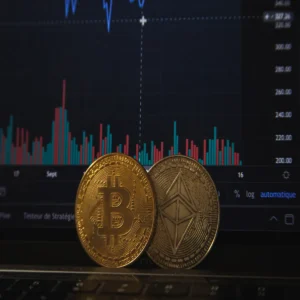
Bitcoin, the largest cryptocurrency by market capitalization, has maintained a relatively stable range in early 2026 compared to the sharp fluctuations seen in earlier years. Ethereum, the second-largest digital asset, is also benefiting from increased adoption, particularly in decentralized finance (DeFi) and enterprise blockchain applications.
Market data suggests that volatility has decreased compared to 2021–2023 levels, a trend often associated with maturing asset classes. While price swings still occur, they are increasingly driven by macroeconomic events such as Federal Reserve interest rate decisions rather than purely crypto-specific news.
This growing stability is attracting a new category of investors—those who previously viewed crypto as too risky but are now reconsidering its role as a hedge against inflation and currency devaluation.
Institutional Adoption Continues to Expand
Institutional involvement in cryptocurrency has grown significantly in the U.S., with major financial firms integrating crypto products into their offerings. Spot Bitcoin ETFs, which gained regulatory approval in recent years, have seen consistent inflows, reflecting strong demand from both retail and institutional clients.
Banks and asset managers are also expanding custody services and blockchain-based financial products. According to industry estimates, institutional investment now accounts for a substantial portion of crypto trading volume in the U.S., signaling a shift away from the retail-dominated market of the past decade.
Experts believe this trend could further reduce volatility while increasing overall market liquidity. “Institutional participation brings a level of discipline and long-term perspective that the crypto market has historically lacked,” said a senior analyst at a New York-based investment firm.
Retail Investors Becoming More Cautious
While institutional interest is rising, retail investors in the U.S. are showing a more cautious approach compared to previous bull runs. Data from major crypto exchanges indicates a decline in high-frequency speculative trading, with more users opting for long-term holding strategies.
This shift is partly due to lessons learned from past market crashes, as well as increased awareness of risks associated with unregulated platforms and tokens. Educational resources and improved transparency from exchanges have also contributed to more informed decision-making among individual investors.
At the same time, younger investors continue to show strong interest in crypto, particularly in areas like NFTs, gaming tokens, and decentralized applications. However, their approach appears more measured, focusing on utility and long-term potential rather than short-term hype.
Macroeconomic Factors Influencing Crypto Trends
The broader economic environment in the United States is playing a crucial role in shaping crypto market behavior. Inflation trends, interest rate policies, and global economic uncertainty all influence investor sentiment toward digital assets.
When traditional markets experience instability, cryptocurrencies often see increased interest as alternative investments. However, higher interest rates can reduce the appeal of riskier assets, including crypto. This dynamic has created a more interconnected relationship between crypto markets and traditional financial systems than ever before.
Financial analysts emphasize that crypto is no longer operating in isolation. Instead, it is becoming an integral part of the broader investment ecosystem, reacting to the same economic signals that drive stocks, bonds, and commodities.
Emerging Technologies and Use Cases Gain Attention
Beyond price movements, technological innovation continues to be a major driver of interest in cryptocurrency. Blockchain applications in areas such as supply chain management, digital identity, and tokenized assets are gaining traction in the U.S.
Companies are increasingly exploring how blockchain can improve efficiency and transparency in various industries. Meanwhile, developments in Layer 2 scaling solutions and interoperability are addressing some of the long-standing challenges related to transaction speed and cost.
These advancements are helping shift the narrative around crypto—from speculative assets to practical tools with real-world applications. As adoption grows, the focus is expected to move further toward utility-driven value rather than price speculation.
Looking Ahead: A More Mature Crypto Market
The outlook for cryptocurrency in the United States appears more stable and structured than in previous years. While challenges remain—particularly around regulation and security—the overall direction suggests a market that is evolving toward greater legitimacy and mainstream acceptance.
Industry observers believe that the next phase of growth will depend less on hype and more on tangible progress in technology, regulation, and real-world use cases. For investors, this means a more balanced environment where opportunities still exist, but risks are better understood and managed.
As 2026 unfolds, the U.S. crypto market is likely to continue its transition from a highly speculative space into a more established segment of the global financial system—one shaped as much by policy decisions as by innovation.