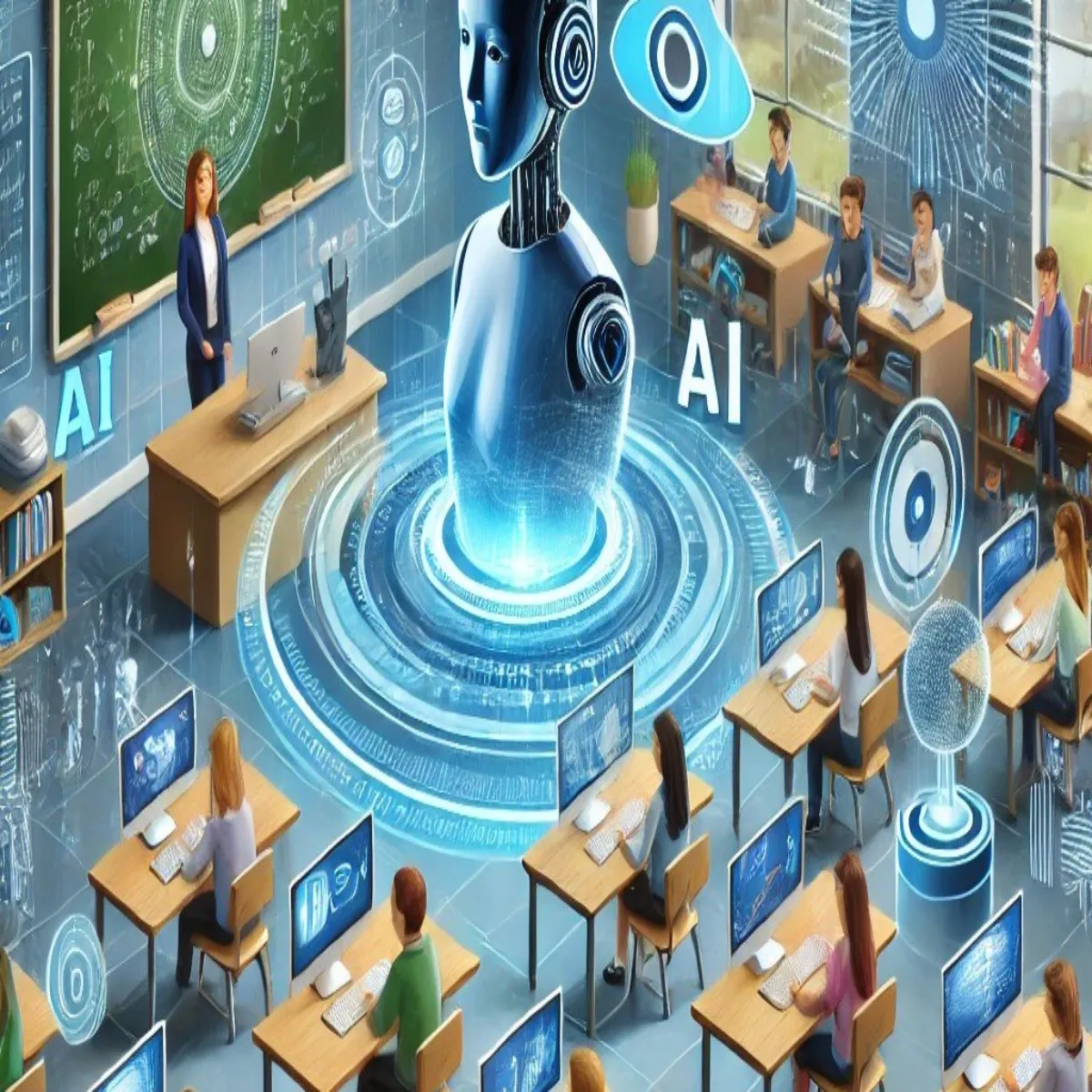
US Schools Expand AI Literacy Programs as Demand for Future Skills Grows
US Schools – The push to integrate artificial intelligence (AI) into K–12 and higher education is accelerating across the United States, as educators and policymakers respond to growing demand for future-ready skills. Several school districts and universities have recently introduced structured AI literacy programs, reflecting a broader shift in how technology is being positioned within classrooms. This trend comes at a time when employers increasingly prioritize digital competencies, and students are expected to navigate a rapidly evolving workforce shaped by automation and data-driven decision-making.

AI Education Moves From Experiment to Standard Practice
What was once considered experimental is now becoming part of mainstream curriculum planning. Districts in states like California, Texas, and New York have begun incorporating AI-focused modules into computer science and STEM courses. According to data from the National Center for Education Statistics (NCES), enrollment in technology-related courses has steadily increased over the past five years, signaling a clear shift in student interest.
Educators are not only teaching students how AI works but also how it impacts everyday life. Lessons now include topics such as machine learning basics, ethical considerations, and real-world applications like healthcare diagnostics and financial forecasting. This evolution reflects a broader understanding that AI is no longer a niche skill but a foundational component of digital literacy.
Universities Partner With Tech Industry for Workforce Alignment
Higher education institutions are also adapting quickly by forming partnerships with major technology companies. Universities such as Stanford, MIT, and the University of Texas have expanded AI-focused degree programs and certifications designed to align closely with industry needs.
These collaborations often include internship pipelines, research funding, and access to proprietary tools. According to a 2025 report by the World Economic Forum, nearly 60% of employers expect AI-related roles to grow significantly in the next three years. As a result, universities are under increasing pressure to ensure graduates are equipped with relevant, job-ready skills.
Industry experts emphasize that this alignment is critical. “We’re seeing a fundamental shift in the skills employers are looking for,” said a senior analyst at a leading workforce research firm. “Educational institutions that adapt quickly will play a key role in closing the talent gap.”
Concerns Around Equity and Access Remain
Despite the momentum, the expansion of AI education has raised concerns about equitable access. Schools in underfunded districts may struggle to implement advanced technology programs due to limited resources, outdated infrastructure, or lack of trained staff.
A recent report from the Education Trust highlights that students in low-income communities are significantly less likely to have access to advanced STEM courses. This disparity could widen the digital divide if not addressed through targeted funding and policy interventions.
Federal and state governments have begun exploring solutions, including grants and public-private partnerships aimed at expanding access. However, experts warn that without sustained investment, disparities in AI education could mirror existing inequalities in the broader education system.
Teachers Receive Training to Keep Pace With Change
As AI becomes more embedded in education, teacher training has emerged as a critical factor in successful implementation. Many educators initially expressed uncertainty about integrating AI tools into their teaching practices, but professional development programs are helping bridge that gap.
Organizations such as the International Society for Technology in Education (ISTE) have launched training initiatives focused on practical classroom applications. These programs aim to equip teachers with both technical knowledge and pedagogical strategies to effectively introduce AI concepts.
Teachers who have undergone training report increased confidence and improved student engagement. “Students are naturally curious about AI,” said a high school teacher in Illinois. “When you connect it to real-world examples, it becomes much more meaningful.”
Ethics and Responsible Use Take Center Stage
Alongside technical skills, there is a growing emphasis on teaching students about the ethical implications of AI. Topics such as data privacy, algorithmic bias, and misinformation are becoming integral parts of the curriculum.
This focus reflects broader societal concerns about how AI technologies are developed and deployed. Educational leaders argue that students must be prepared not only to use AI but also to critically evaluate its impact.
Several states are already drafting guidelines to ensure responsible AI use in schools. These frameworks aim to balance innovation with accountability, ensuring that students understand both the opportunities and risks associated with emerging technologies.
Outlook: AI Literacy Becoming a Core Educational Priority
The expansion of AI education across the United States signals a long-term transformation in how learning is structured. As schools and universities continue to adapt, AI literacy is likely to become as fundamental as reading, writing, and mathematics.
While challenges related to access and implementation remain, the overall trajectory suggests strong momentum. With continued collaboration between educators, policymakers, and industry leaders, AI education is poised to play a central role in preparing the next generation for a technology-driven future.