
U.S. Education System Faces Major Shift as AI Tools Enter Classrooms
U.S. Education – The American education system is undergoing a significant transformation as artificial intelligence (AI) tools rapidly become part of everyday classroom learning. From personalized tutoring platforms to automated grading systems, schools and universities across the United States are adopting AI-driven solutions to enhance student outcomes and reduce administrative burdens. Recent data from the U.S. Department of Education and private research firms shows a steady increase in AI adoption, particularly in K–12 districts and higher education institutions aiming to modernize learning environments.
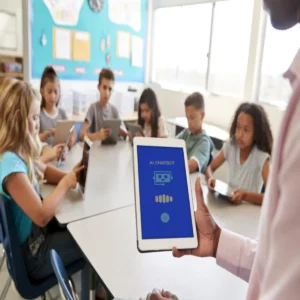
Growing Use of AI in Classrooms Across the U.S.
Schools nationwide are experimenting with AI-powered platforms that adapt to individual student learning styles. These tools analyze performance data in real time, offering customized lessons that help students grasp complex concepts more effectively. According to a 2025 report by HolonIQ, nearly 47% of U.S. school districts have integrated some form of AI-based learning technology, a sharp rise from just 23% in 2022.
Teachers are also benefiting from these innovations. AI-assisted grading tools are helping educators save hours each week, allowing them to focus more on teaching and student engagement. In many classrooms, AI is being used to identify learning gaps early, enabling timely intervention before students fall behind.
Concerns Over Data Privacy and Student Safety
Despite the growing adoption, concerns about data privacy and student safety remain a major issue. Education experts and policymakers are increasingly questioning how student data is collected, stored, and used by AI platforms. The Federal Trade Commission (FTC) has already initiated reviews of several EdTech companies to ensure compliance with child data protection laws.
Parents are also expressing concerns about how much personal information is being shared. Advocacy groups argue that stricter regulations are needed to protect students, especially younger children, from potential misuse of their data. Schools are now under pressure to strike a balance between technological advancement and privacy protection.
Teachers Adjust to New Roles in AI-Driven Learning
The integration of AI is also reshaping the role of teachers. Rather than replacing educators, AI is being positioned as a support tool that enhances teaching effectiveness. Teachers are increasingly acting as facilitators, guiding students through AI-enhanced learning experiences rather than delivering traditional lectures.
Professional development programs are being introduced across several states to help educators adapt to these changes. Training sessions focus on how to effectively use AI tools, interpret data insights, and maintain a human-centered approach to education. Experts emphasize that while AI can improve efficiency, the role of human interaction remains irreplaceable in student development.
Federal and State Policies Begin to Take Shape
Government agencies are starting to respond to the rapid growth of AI in education. The U.S. Department of Education released new guidelines in early 2026 outlining best practices for AI implementation in schools. These guidelines emphasize transparency, accountability, and equitable access to technology.
Several states, including California and New York, are drafting legislation to regulate AI usage in classrooms. These policies aim to ensure that all students, regardless of socioeconomic background, have equal access to advanced learning tools while maintaining ethical standards.
Impact on Student Performance and Learning Outcomes
Early studies suggest that AI integration may have a positive impact on student performance. Schools that have implemented adaptive learning platforms report improvements in test scores, particularly in subjects like math and science. A Stanford University study found that students using AI-assisted tutoring systems showed a 15–20% increase in comprehension rates compared to traditional methods.
However, experts caution that long-term effects are still being studied. While initial results are promising, there is a need for continuous evaluation to understand how AI affects critical thinking, creativity, and social skills over time.
The Future of Education in a Tech-Driven Era
As AI continues to evolve, its role in education is expected to expand even further. Analysts predict that by 2030, nearly 70% of U.S. classrooms could incorporate some form of AI technology. This shift is likely to redefine how students learn, how teachers teach, and how educational institutions operate.
The key challenge moving forward will be ensuring that technology enhances learning without compromising the human aspects of education. Policymakers, educators, and technology providers will need to work collaboratively to create a system that is both innovative and responsible.
Tag Words: AI in education, U.S. schools, EdTech trends, student data privacy, classroom technology, Department of Education, adaptive learning, teacher training, digital learning tools, education policy,
U.S. Colleges Expand Workforce-Focused Programs Amid Rising Tuition Concerns
As college tuition continues to rise across the United States, universities and community colleges are increasingly shifting their focus toward workforce-oriented education programs. This strategic move aims to address both student debt concerns and the growing demand for job-ready graduates in key industries such as healthcare, technology, and skilled trades.
Recent data from the National Center for Education Statistics (NCES) shows that average tuition fees at four-year institutions have increased by nearly 35% over the past decade. In response, many institutions are rethinking traditional degree models and introducing shorter, career-focused programs designed to deliver faster returns on investment for students.
Shift Toward Career-Focused Education Models
Colleges are now offering more certificate programs, associate degrees, and hybrid learning options that align closely with industry needs. These programs are typically shorter in duration and more affordable than traditional four-year degrees, making them an attractive option for students seeking immediate employment opportunities.
Community colleges are leading this shift, with enrollment in vocational and technical programs seeing a noticeable uptick. Fields such as cybersecurity, nursing, and renewable energy are among the fastest-growing areas, reflecting broader economic trends and labor shortages in these sectors.
Employers Play a Bigger Role in Curriculum Design
A notable trend in U.S. higher education is the increasing collaboration between educational institutions and employers. Companies are partnering with colleges to help design curricula that match real-world job requirements. This ensures that graduates possess the skills employers are actively seeking.
Major corporations, including Google, IBM, and Amazon, have expanded their involvement in education by offering certification programs and apprenticeships. These initiatives often provide students with direct pathways to employment, reducing the uncertainty traditionally associated with higher education outcomes.
Student Debt Pressures Influence Decision-Making
The rising cost of education continues to shape how students approach higher learning. According to the Federal Reserve, total student loan debt in the U.S. exceeded $1.7 trillion in 2025. This financial burden is prompting many students to reconsider the value of traditional degrees and explore alternative education pathways.
Surveys indicate that a growing number of high school graduates are prioritizing affordability and job placement rates when choosing educational programs. As a result, institutions that offer transparent outcomes and lower costs are gaining a competitive advantage.
Online and Hybrid Learning Gain Momentum
The expansion of online and hybrid learning models is another key development in the U.S. education landscape. Accelerated by the COVID-19 pandemic, digital learning has become a permanent fixture in higher education. Universities are investing heavily in online platforms to reach a broader audience and provide flexible learning options.
Students, particularly working adults, are increasingly opting for programs that allow them to balance education with professional and personal commitments. This flexibility is helping institutions attract non-traditional students who may not have considered college otherwise.
Government Initiatives Support Affordable Education
Federal and state governments are also taking steps to make education more accessible. Programs such as tuition-free community college initiatives and expanded financial aid options are gaining traction. The Biden administration has proposed additional funding to support workforce development programs and reduce student debt burdens.
Several states have already implemented policies aimed at increasing access to affordable education, particularly for low-income students. These initiatives are expected to play a critical role in shaping the future of higher education in the U.S.
Long-Term Implications for the Education System
The shift toward workforce-focused education represents a broader transformation in how higher education is perceived and delivered. While traditional degrees will continue to hold value, alternative pathways are becoming increasingly mainstream.
Experts believe that this trend could lead to a more flexible and inclusive education system, one that better aligns with economic needs and student expectations. However, challenges remain in ensuring quality, maintaining academic standards, and providing equal access to all students.
As institutions continue to adapt, the focus will likely remain on balancing affordability, accessibility, and career readiness. The evolving landscape suggests that the future of U.S. education will be defined by its ability to respond to both economic pressures and changing student priorities.