
US Markets Show Mixed Signals as Inflation Eases and Fed Holds Course
US Markets – The US financial landscape is entering a cautiously optimistic phase as fresh economic data points to cooling inflation while the Federal Reserve maintains a measured stance on interest rates. Investors, policymakers, and consumers alike are navigating a market that is no longer overheated but still far from fully stabilized. Recent reports suggest that while price pressures are easing, underlying economic resilience continues to shape expectations for the remainder of 2026.
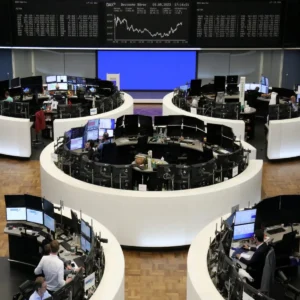
Inflation Trends Offer Measured Relief to Consumers
The latest data from the Bureau of Labor Statistics indicates that annual inflation has slowed compared to previous highs, offering some relief to American households. Consumer Price Index (CPI) growth has moderated, particularly in energy and goods categories, which had previously driven much of the inflation surge. However, services inflation—especially in housing and healthcare—remains relatively sticky.
Economists note that while the decline in inflation is encouraging, it does not yet signal a full return to pre-pandemic price stability. Core inflation, which excludes volatile food and energy prices, is still above the Federal Reserve’s long-term target of 2%. This suggests that while the worst may be behind, the path forward will likely be gradual rather than rapid.
For everyday Americans, this translates into a mixed experience. Grocery bills and gas prices have become somewhat more manageable, but rent and insurance costs continue to strain budgets. This divergence is a key reason why consumer sentiment, although improving, has not fully rebounded.
Federal Reserve Maintains Cautious Policy Approach
In its most recent meeting, the Federal Reserve chose to hold interest rates steady, signaling a wait-and-see approach. After an aggressive cycle of rate hikes over the past two years, the central bank appears focused on assessing the cumulative impact of its policies on the broader economy.
Fed Chair Jerome Powell emphasized the importance of data-driven decision-making, noting that premature rate cuts could risk reigniting inflation. At the same time, keeping rates too high for too long could dampen economic growth. This delicate balance is central to current monetary policy.
Market participants are closely watching for signals of when rate cuts might begin. Futures markets suggest that investors expect potential easing later in the year, though the timeline remains uncertain. The Fed’s cautious tone reflects both progress on inflation and lingering risks in the economic outlook.
Stock Market प्रतिक्रिया Reflects Investor Uncertainty
US equity markets have shown mixed performance in recent weeks, reflecting the uncertain macroeconomic environment. Major indices like the S&P 500 and Nasdaq have experienced periods of volatility as investors weigh the implications of interest rates, corporate earnings, and global economic trends.
Technology stocks, which are particularly sensitive to interest rate changes, have seen uneven movement. While some companies continue to post strong earnings driven by artificial intelligence and cloud computing demand, others face pressure from higher borrowing costs and cautious consumer spending.
Meanwhile, sectors such as healthcare and utilities have attracted attention as more defensive investment options. These shifts highlight a broader trend of portfolio rebalancing as investors seek stability amid evolving market conditions.
Labor Market Remains Strong but Shows Signs of Cooling
The US labor market continues to be a pillar of economic strength, with unemployment rates remaining historically low. Job creation has remained steady, and wage growth, while moderating, still supports consumer spending.
However, there are emerging signs that the labor market is beginning to cool. Job openings have declined from their peak levels, and some industries—particularly tech and finance—have announced targeted layoffs. This does not yet indicate a downturn but suggests that the labor market is moving toward a more sustainable equilibrium.
For policymakers, this is a critical development. A gradual cooling in employment can help reduce wage-driven inflation without triggering a sharp rise in unemployment, aligning with the Fed’s goal of achieving a “soft landing.”
Housing Market Faces Ongoing Pressure from High Rates
The US housing market remains one of the most impacted sectors due to elevated interest rates. Mortgage rates, while slightly lower than recent peaks, are still significantly higher than pre-2022 levels. This has led to reduced affordability for many prospective homebuyers.
Home sales have slowed, and inventory levels remain tight as existing homeowners are reluctant to sell and take on higher borrowing costs. At the same time, home prices have shown resilience in many regions, supported by limited supply.
Real estate analysts suggest that meaningful recovery in the housing sector will depend on sustained declines in mortgage rates. Until then, the market is expected to remain constrained, with affordability continuing to be a major concern.
Consumer Spending Holds Up Amid Economic Shifts
Despite economic uncertainties, consumer spending in the US has remained relatively strong. Retail sales data indicates that Americans continue to spend, particularly in areas such as travel, dining, and entertainment.
This resilience is partly supported by a strong labor market and accumulated savings from previous years. However, there are signs that consumers are becoming more selective in their spending, prioritizing essential and experiential purchases over discretionary goods.
Credit card debt levels have also risen, indicating that some households may be relying more on borrowing to maintain their spending habits. This trend is being closely monitored as it could have implications for financial stability if economic conditions weaken.
Outlook for the US Economy Remains Balanced
Looking ahead, the US economy appears to be on a stable but cautious trajectory. The combination of easing inflation, steady employment, and resilient consumer activity provides a solid foundation. However, risks remain, including global economic uncertainties, geopolitical tensions, and the potential for policy missteps.
Financial experts suggest that the remainder of 2026 will likely be characterized by moderate growth rather than rapid expansion. As one senior economist at a leading investment firm noted, “The economy is transitioning from recovery to normalization, and that process naturally comes with periods of adjustment.”
For investors and consumers alike, staying informed and adaptable will be key. The current environment rewards careful decision-making rather than aggressive risk-taking, reflecting a broader shift in the financial landscape.